
Sequencing the Masterplan: Making Redevelopment Work
29.01.26
Large development projects often face the same challenge – earthworks and construction generate material that gets stockpiled, moved around multiple times and becomes an expensive problem to solve at the end of the project. We see it happen frequently, so our director Howel Morris has explained how we have developed solutions to prevent this industry wide issue here at Rodgers Leask.
During ground clearance, drainage construction and foundation excavation, lots of material is generated. It can quickly be separated into general fill, construction material (such as concrete for crushing), clean natural, or unsuitable for reuse. Without effective planning and risk assessment, it is common for this stage of construction to produce an unwanted surplus of materials that are not immediately suitable for reuse.
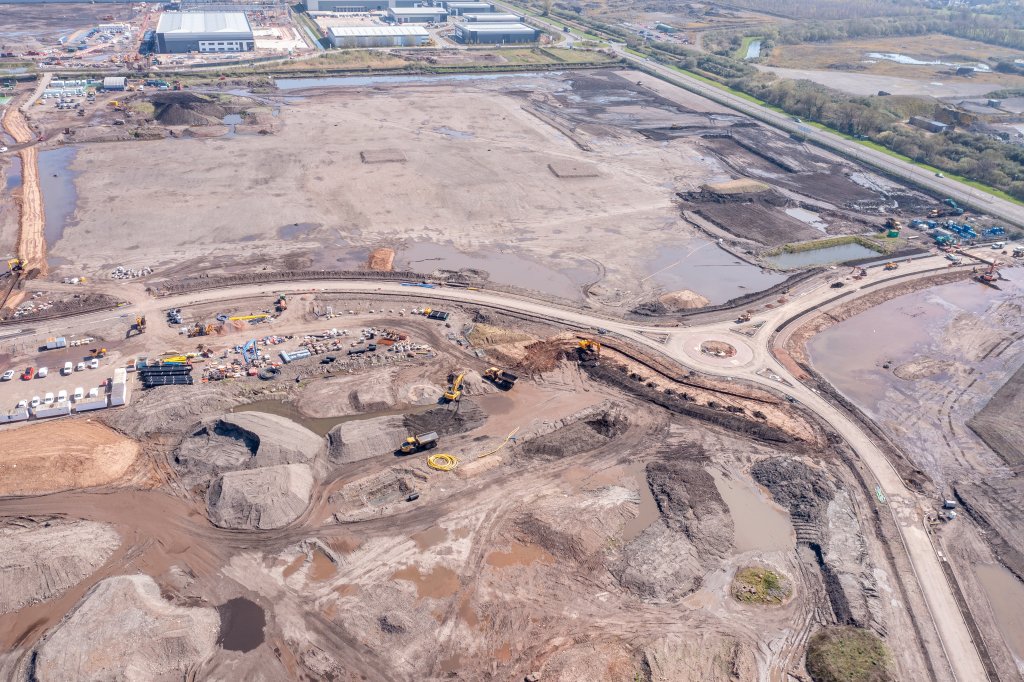
At Rodgers Leask, we offer our expertise to help tackle this issue by sequencing the generation, requirements and movement of such materials. We begin with assessing the volumes across the development of the scheme. Before work begins, we map out when and where materials will be generated, and when and where it is needed. This helps us identify misalignments early on, such as plot and road completion dates which don’t align with material requirement dates – causing stockpiling and double handling.
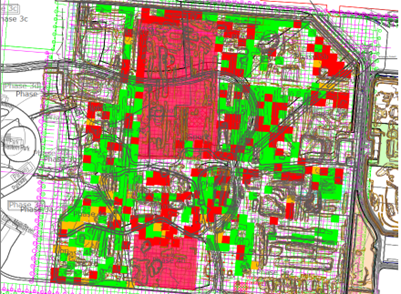
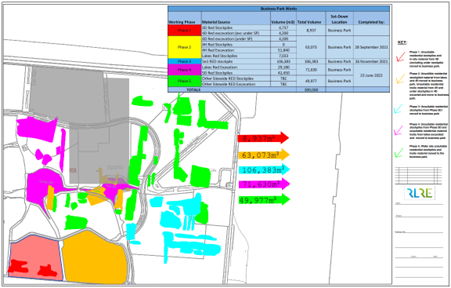
Once we highlight these issues in the sequence, we can adjust the program before they become costly or time consuming.
When it comes to selecting where material is to be placed, we take several considerations:
- Suitability: Can the material remain where it is in the final development?
- Composition: How effectively can the material be engineered and to what specification for its proposed end use?
- Does the plan align with the client’s delivery schedule?
- Efficiency: Is the proposed set down location economically efficient, or could the haul distance be reduced?
- End use: Could the material be used as a planting medium and is it suitable for public open spaces and residential clean cover systems?
When calculating a mass balance for sequencing material reuse on large scale developments, a standard cut-and-fill balance can be a long way from what is realised on site. Calculations require careful attention to factors that are often overlooked, including:
- Concrete and oversize material typically account for 5-10% of the overall volume;
- Compaction and bulking can often change the end volume by 30%;
- Additional sources need to be considered, as construction phases can generate large volumes of material through SUDS installation, foundation work and drainage construction.
Our sequencing can also maintain a mass balance calculation to sit alongside formal, digital cut-and-fill assessments, providing a review process for monthly, quarterly and annual reviews.
The understanding of engineering requirements or mitigation is also assisted by knowing how much soil is generated by certain foundation techniques. The material generated can then be part of financial assessments along with design decisions.
Proper sequencing also allows for an improved tender process, by knowing how and where material is imported and exported from at each phase of the scheme. The plan must include a processing area where material is crushed for reuse, quarantined, or improved for reuse.
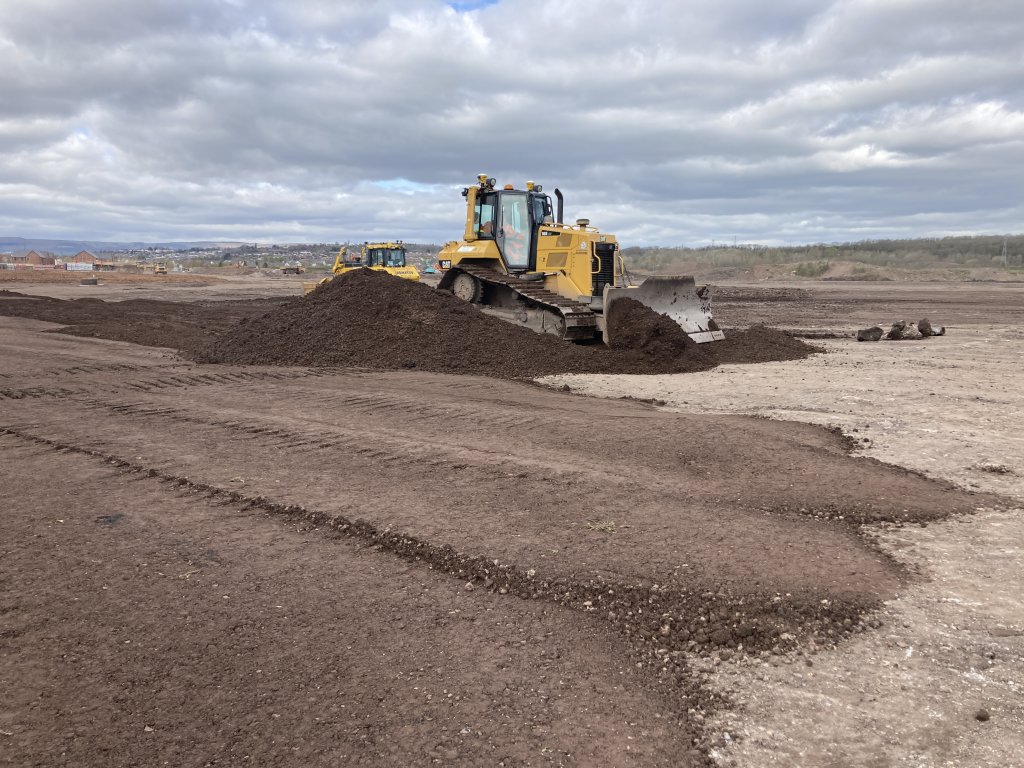
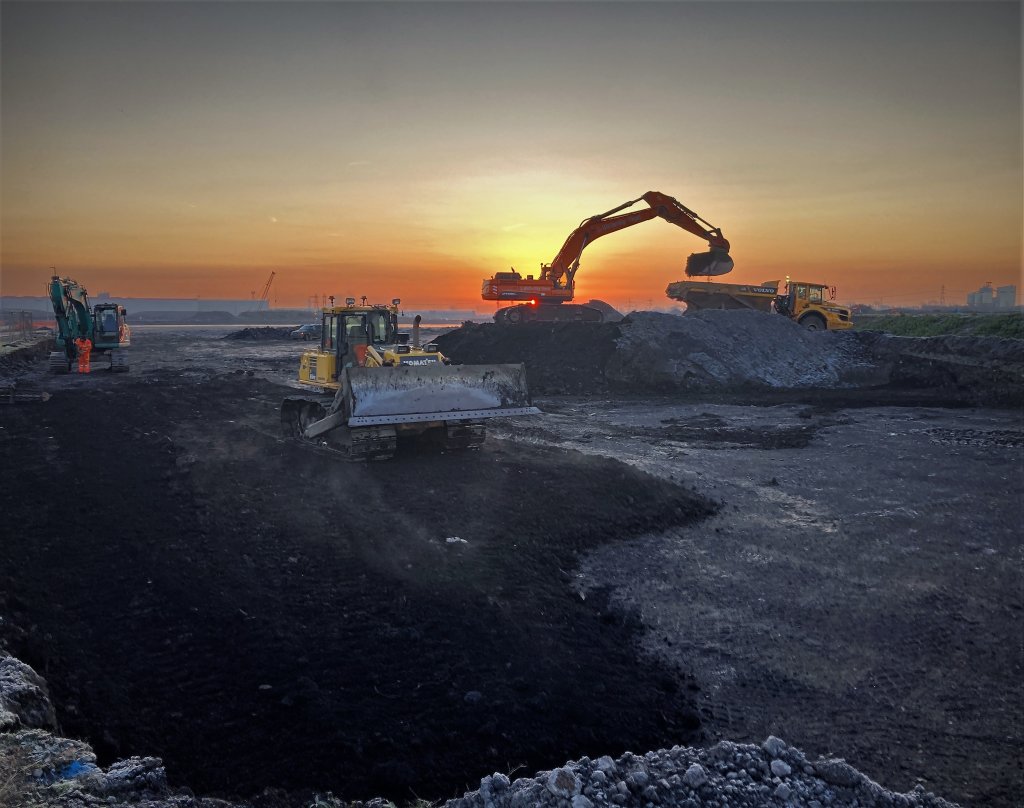
The ability to review what material was and where it came from is a key part of the tracking and validation requirements for both planning condition validation and DoWCoP MMP validation.
By sequencing material movement from the beginning of a project, we eliminate the surplus stockpile problem. It’s about getting the right material to the right place at the right time, without unnecessary double-handling or cost.
Read more about our geo-environmental expertise on our website here: https://rodgersleask.com/our-services/geo-environmental-engineering/